




How Real-Time Rewards Can Strengthen Crypto-Backed Credit Programs
Rewards are still a major part of credit card programs. However, waiting for them feels different than it once did. According to Deloitte’s 2024 Consumer Loyalty Survey, 86% of consumers rated financial rewards as an important feature of loyalty programs.
Also, with instant payments now the norm, waiting days or weeks for rewards can feel slow.
For issuers, delivering real-time rewards is not as simple as making them available faster. Customers may only see the reward appearing in their account but ensuring that it happens accurately and consistently can be far more complicated than it looks.
Real-Time Rewards Start with Real-Time Processing
A quick reward payout is possible if the core systems support it.
Real-time rewards depend on real-time processing. Without it, rewards can lag behind the transactions that generate them, creating a disconnect between spending and earning.
Many programs still process the transaction first and calculate rewards later. While this approach may work for traditional models, it can feel outdated in today’s digital-first environment.
Keeping the Reward Record Current
Unlike points or cashback, the value of a digital asset can change after a reward is issued. Issuers need to know exactly what customers earned at the time of the transaction.
Customers should be able to look at their account and know exactly what they earned.
That means issuers need ledgering that updates as rewards are issued.
A Different Approach to Rewards
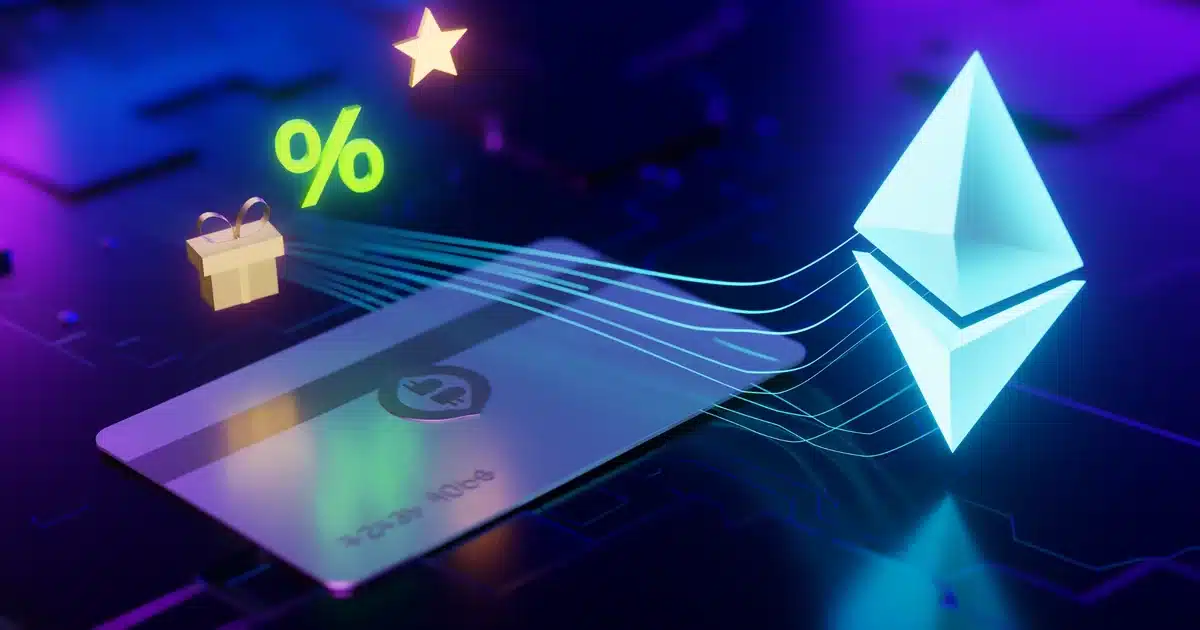
Most rewards programs rely on points or cashback. Crypto-backed credit programs offer different kinds of rewards by allowing customers to earn digital assets through everyday spending.
As Jerod Morales, Deputy Editor at Forbes Advisor, notes, crypto rewards cards offer consumers “a low-risk way to grow your portfolio” because users can earn digital assets through spending activity rather than purchasing cryptocurrency directly.
Several card issuers have already explored this model. Products such as the Gemini Credit Card, Coinbase One Card, and Crypto.com Card allow users to earn cryptocurrency through everyday spending rather than traditional rewards currencies.
For some customers, that rewards may be one of the main reasons to join the program. Each eligible transaction adds a digital asset to their account.
For issuers, it creates an opportunity to offer something different from traditional rewards programs.
Keeping Transactions and Rewards Connected
This is where CoreCard comes in.
CoreCard processes transactions and rewards within the same environment. This allow issuers to support real-time crypto rewards without relying on separate systems.
To learn more, watch the webinar, Credit Meets Crypto: Launching Card Programs in a Multi-Asset World.